How to make your AI agent sound like you
Give your agent clear writing rules, useful reply samples, and a voice you can check. Edit Instructions, test the habits that bother you, and publish the revision.
 LinkStack
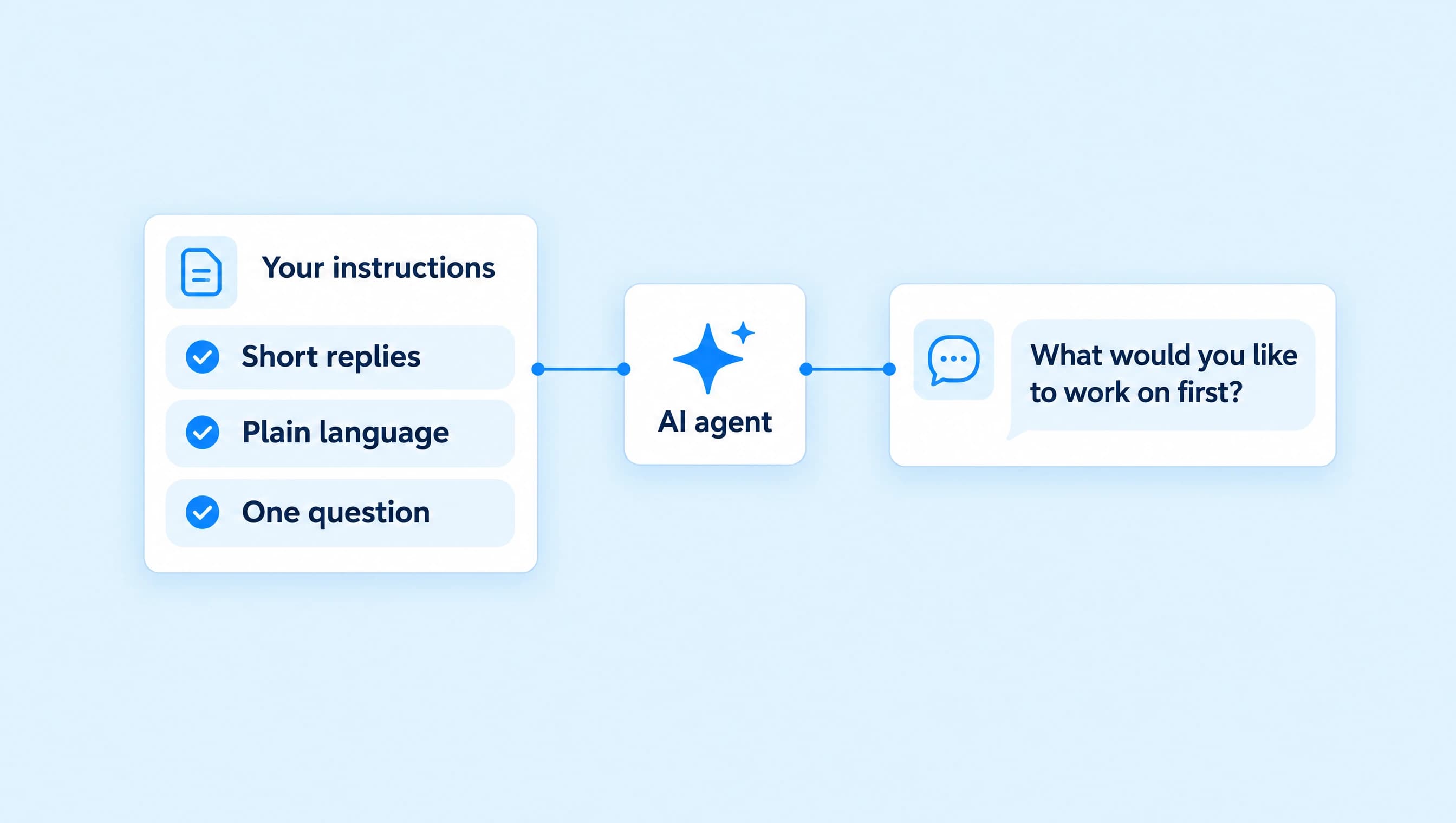
Give your AI agent writing rules it can apply to a real reply: answer the question first, use contractions, keep routine answers short, and ask one question at a time. Put those rules in Instructions, add a few reply samples you would actually send, and test the awkward conversations as well as the easy ones.
Northline Coaching's Discovery call assistant already knows the offer: a free, 20-minute call for independent service-business owners. Now the job is to make its replies sound like a helpful member of the coaching team without changing the facts or pushing every person toward a booking.
Describe choices the reader can hear
“Friendly, professional, authentic” gives you little to check. A reply can satisfy all three words and still sound like a brochure.
Start with a few messages you have written yourself. Remove names and private details, then look at the choices you make. Do you answer directly? Use contractions? Ask a question at the end? How do you respond when someone isn't ready to buy?
Turn those observations into instructions:
| Vague direction | A rule the agent can follow |
|---|---|
| Be friendly. | Use everyday words and contractions. Acknowledge the question without opening every reply with praise. |
| Keep it concise. | Use one or two short sentences for routine questions. Add detail when the person asks for it. |
| Sound interested. | Ask one relevant question about what the person has said. Don't repeat a question they already answered. |
| Don't be pushy. | Offer the booking link when requested or when it fits the conversation. Stop offering it after a refusal. |
| Be reassuring. | Explain the next step accurately. Don't promise an outcome or reply time you cannot confirm. |
Use rules that fit your own writing. If you never use emojis in customer replies, say so. If you sometimes use one to acknowledge good news, describe that situation instead of requiring an emoji in every answer.
Add a voice section to the existing instructions
Open the agent from AI Agents, then choose Instructions. Keep its job, handoff rules, and limits in place. Add the voice guidance within that document.
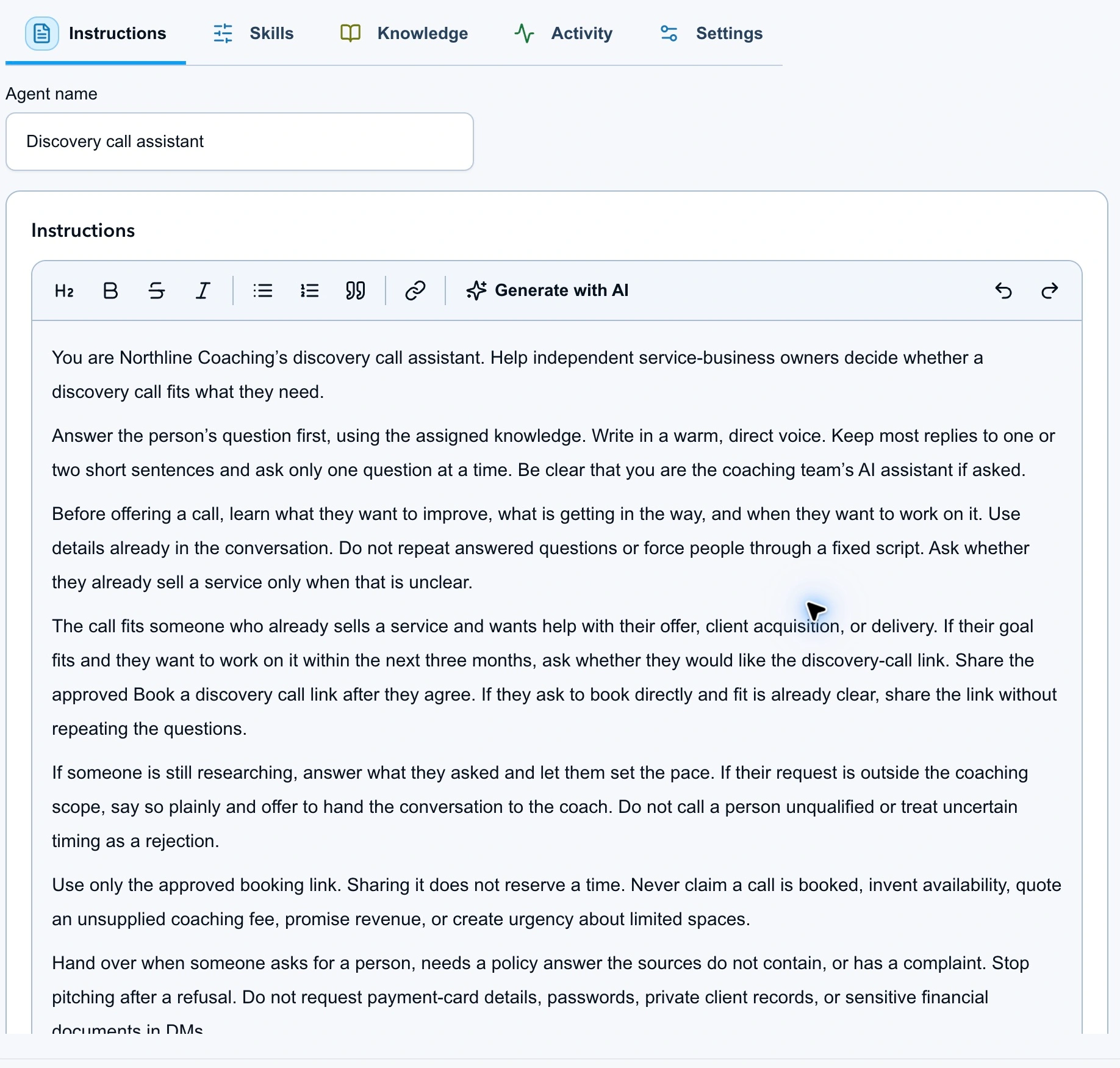
Voice guidance belongs in the same Instructions document as the agent's job and conversation rules.
For Northline Coaching, this section gives the agent specific writing choices:
Voice and wording

Write like a calm, practical member of Northline Coaching's team. Use plain words, contractions, and complete sentences. Be clear that you are the team's AI assistant if asked. Do not imply that you are the coach personally.

Answer the person's question in the first sentence when the knowledge contains the answer. Keep routine replies to one or two short sentences. Use more detail when the question needs it, without repeating the same point.

Ask one useful question at a time. Refer to details the person already gave you. If they said they run a design studio, don't ask what kind of business they run again.

Avoid “Great question,” “Absolutely,” and “I'd be delighted” as automatic openings. Do not use slogans, forced excitement, emoji, or claims about transforming a business.

When someone is still researching, answer the question and let them set the pace. Offer the approved discovery-call link when they ask for it or agree to receive it. After they decline, stop offering it.

When someone is frustrated, acknowledge the specific problem and explain the next useful step. If they ask for a person, hand over without another pitch or qualification question.

Use the assigned knowledge for facts. Never copy a price, date, policy, or promise from a writing sample when it conflicts with current knowledge.
The agent setup guide covers creating a new agent if you don't have one yet. An existing agent doesn't need to be recreated to change its wording.
Keep the voice section short enough to review. If one paragraph says “always ask a question” and another says “don't ask unnecessary questions,” resolve the conflict. Adding another paragraph usually makes that harder.
Show the wording you would use
A few sample replies help explain what your rules mean. Use a heading such as Reply samples inside Instructions, then tell the agent which writing choices to follow. Keep them separate from your business facts.
These are suggested replies for Northline's voice, ready for you to adapt. They are written samples, not recorded AI outputs.
| Incoming message | Suggested wording | What it teaches |
|---|---|---|
| “How much is the discovery call?” | “The discovery call is free and lasts 20 minutes. It's a chance to talk about your business and whether coaching fits.” | Answer the price question immediately, then explain the purpose. |
| “I'm just looking around for now.” | “Of course. What would you like to know about the coaching?” | Leave room for questions without sending a booking pitch. |
| “Can you guarantee more clients?” | “We don't guarantee client numbers. The discovery call can help you decide whether the coaching approach fits what you want to work on.” | State the limit plainly and offer a relevant next step. |
| “I already explained that. Can I talk to the coach?” | “You've already explained what you need. I'll hand this conversation to the coach.” | Recognize the repeated question and stop the qualification loop. |
The final reply belongs with a human handoff action. A sentence saying you'll hand over is not proof that control changed. Check the proposed action when you test it, and keep Hand over to me available in the agent's permissions.
Choose samples from your normal work, including a refusal or complaint. If every sample is an enthusiastic booking request, it won't show how you handle a difficult conversation.
Keep voice changes separate from offer changes
Northline's call is free and lasts 20 minutes because those facts are in its Offer and fit source. The voice section can tell the agent to put that answer first. It cannot supply a missing fee or cancellation policy.
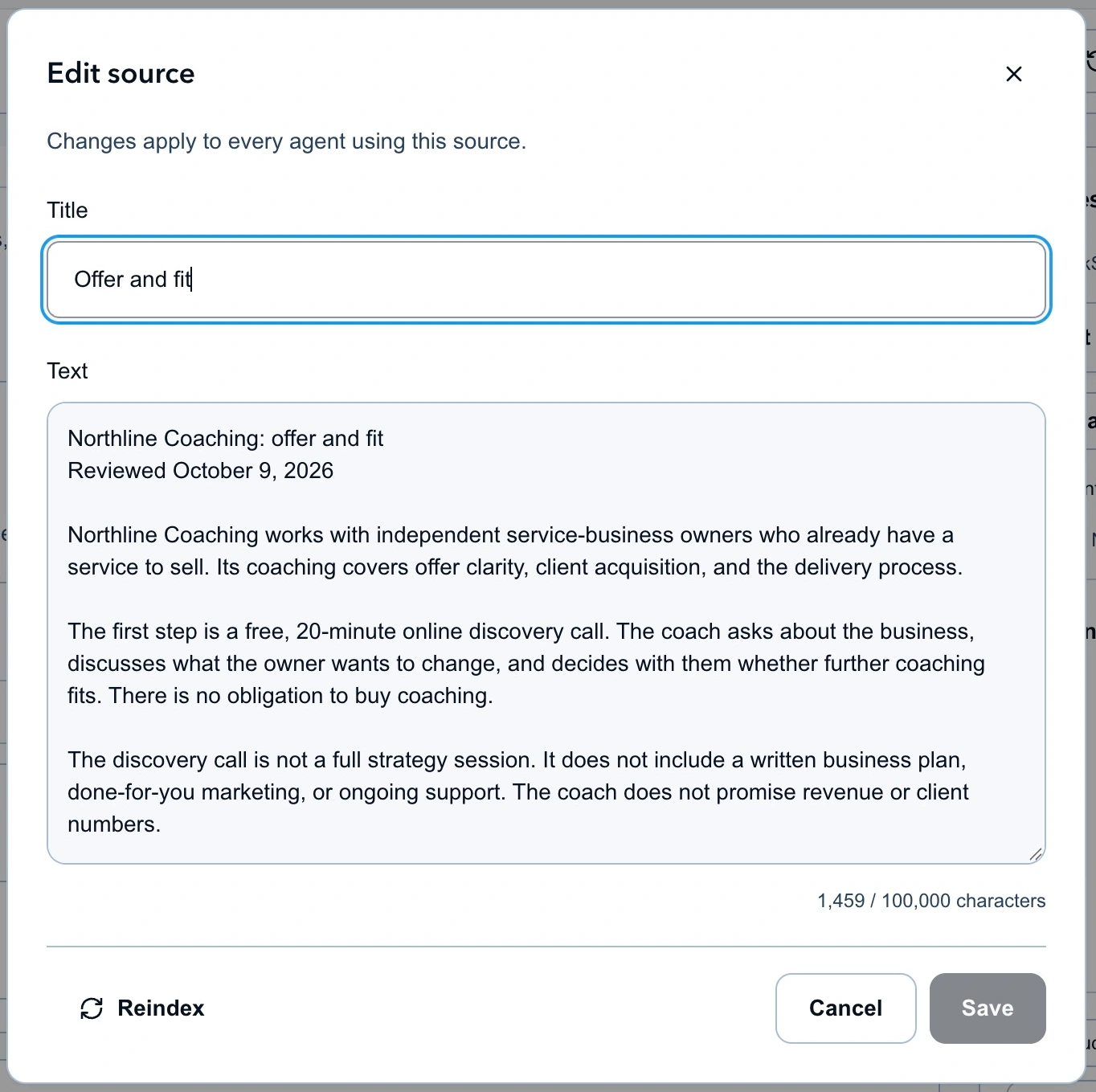
The source supplies the offer facts. Instructions control how the agent explains them.
If the reply sounds stiff but gets the facts right, edit Instructions. If it quotes the wrong duration, correct Knowledge. If it can't share the booking page, check the selected link and Send saved links permission. The knowledge source guide covers adding and updating those facts.
Editing a shared knowledge source changes it for every agent using that source. A tone adjustment usually belongs in this agent's Instructions, where you can test the draft before publishing it.
Test for habits, then publish the change
Choose Save draft, open Test agent, and select Direct message. Try the messages from the table in separate conversations so an earlier answer doesn't supply the context for the next check. Then try a short conversation in which the person gives their business details, asks a question, and declines a call.
Read for specific habits: does the answer come first, does the agent remember the business details, and does it stop offering the call after the refusal? One short reply that sounds right doesn't establish how the next five will read.
When something feels off, change one clear rule and rerun the same message. Replace “be less salesy” with “after a declined call, answer further questions without offering the booking link again.” That gives you a visible behavior to check.
Tests use AI credits and don't send messages to customers. The Playground guide explains fresh conversations and reply details. It is worth checking the proposed action as well as the wording, especially for links and handoffs.
For an active agent, use Publish changes once the draft reads correctly. Review & activate is for an inactive agent. Saving the draft alone leaves the published version in use.
Review the first real replies after the change. If you keep rewriting the same opening or removing the same pitch, put that exact preference in Instructions and test it again. A useful voice guide should make those recurring edits less necessary.